
Edition IV
· Exhibition le geste du commun ·
For their second collaboration, the art centre KOMMET and the nomadic residency an· other here presents the collective exhibition le geste du commun in Lyon. Following a joint residency between France and Germany, artists Pierre Boggio, Julie Escoffier and Gisèle Gonon unveil the results of their research conducted in Berlin and in the village of Montbrun-les-Bains in Drôme. This exhibition brings together artworks that explore the notion of community through our links with stories, territories and collective dynamics.
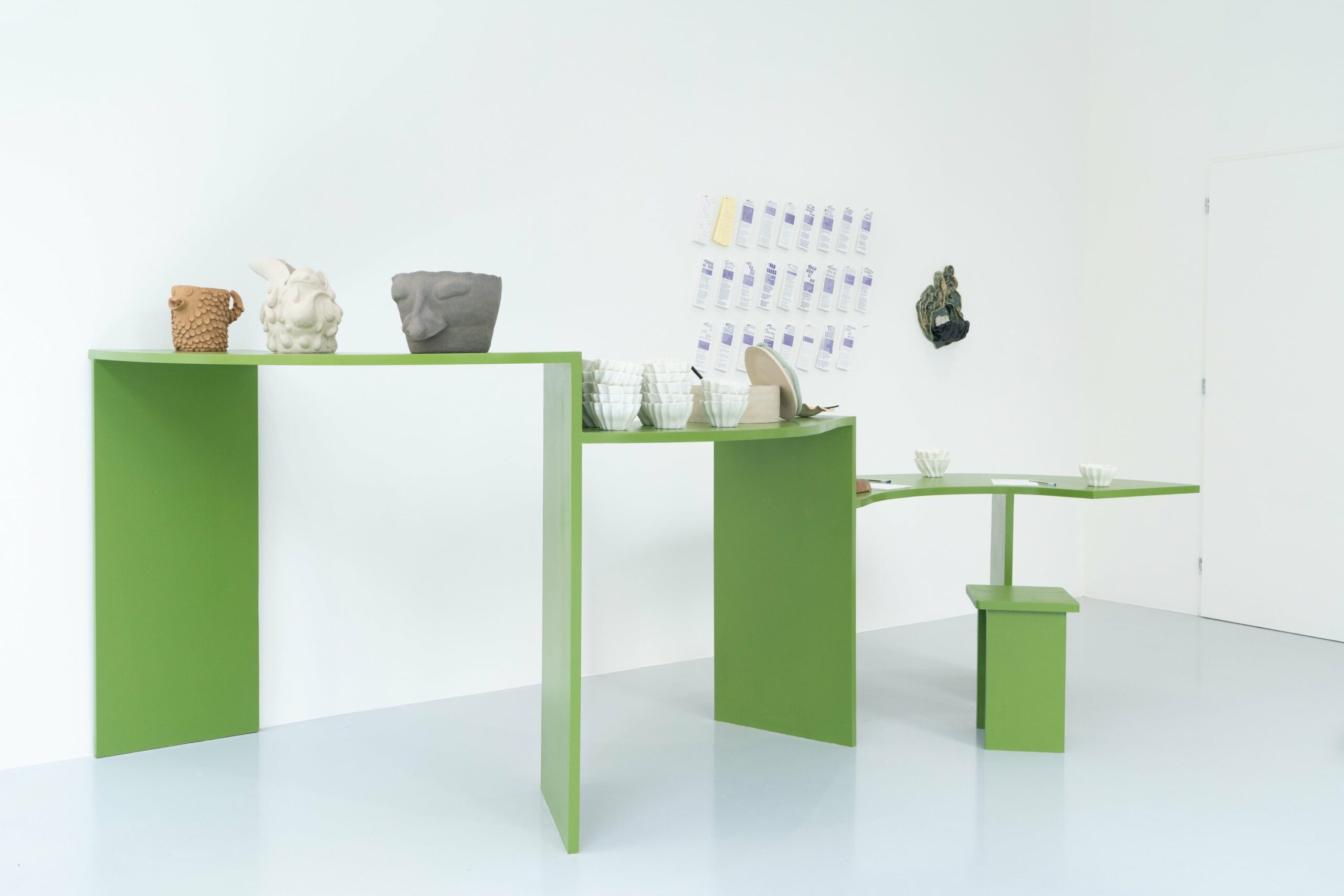
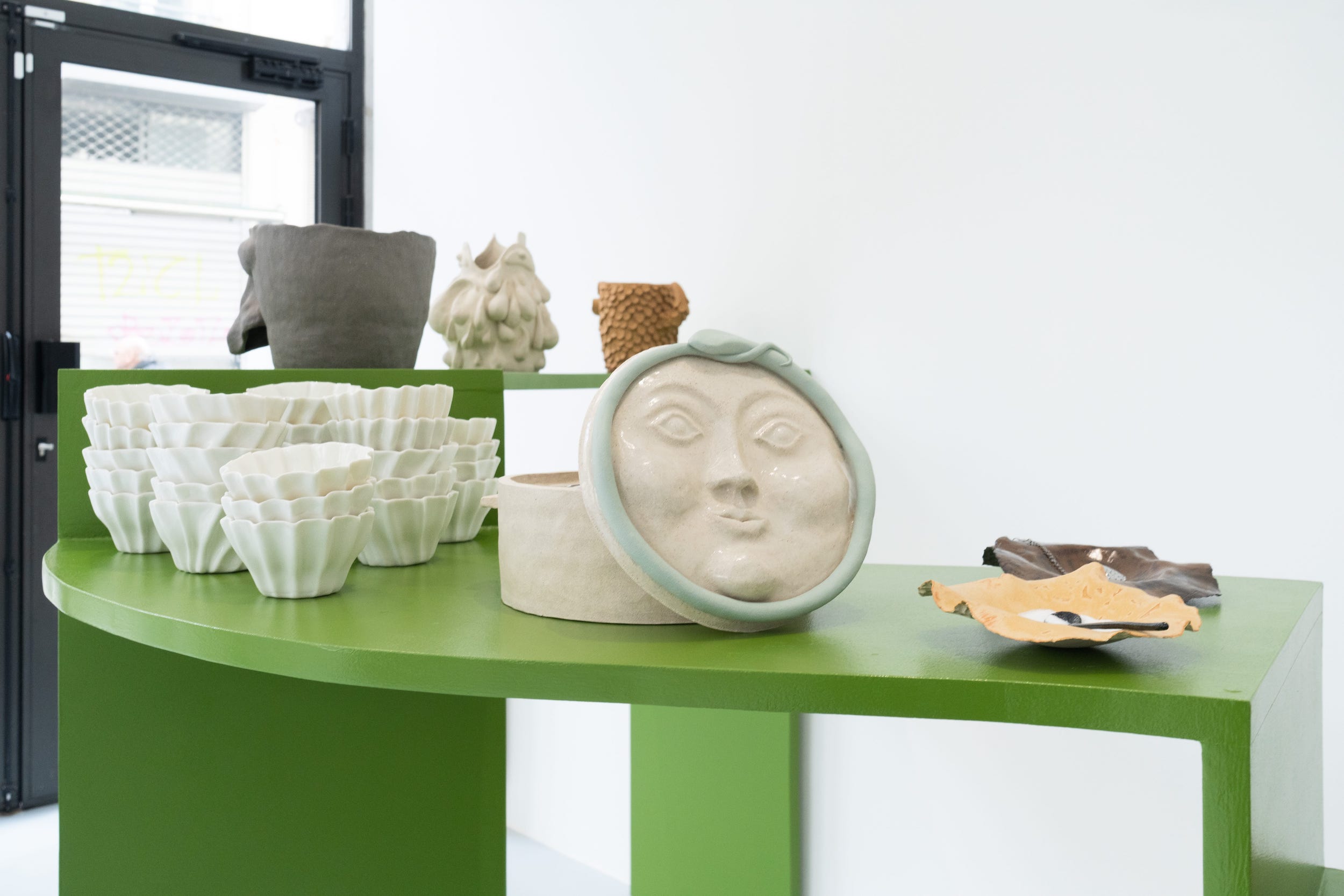
At the crossroads of folklore, orality and collective rituals, Pierre Boggio studies visible and invisible forms of transmission. His installation summons family heritage, culinary traditions and local mythologies. He revisits legendary figures in the form of pots, representing the Tarasque, the Ondine and the Orcolat. These creatures, from popular stories, embody telluric forces, metamorphosis and myths of protection or threat, thus reactivating a collective memory.
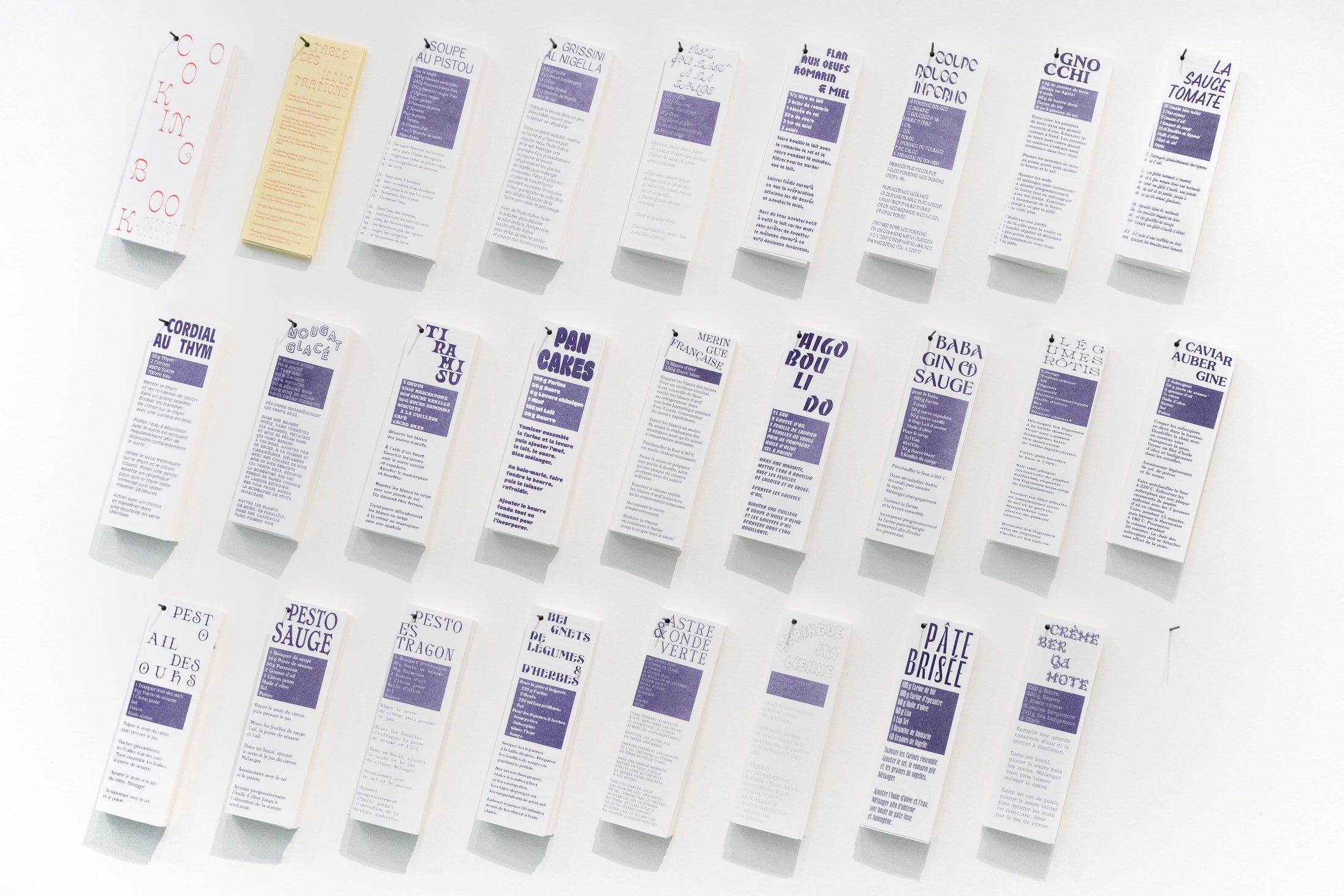
At the heart of this work, a cookbook is constructed, where each element becomes the witness of a culinary heritage, nourished by the stories and experiments of those who perpetuate them. During the exhibition, visitors are invited to sip a beverage and to transmit, in writing, anecdotes associated with cooking. Through this convivial moment, his installation recalls the way in which knowledge is spread, in particular through speech, the sharing of a meal or the repetition of an ancestral gesture. In exchange, the artist gives the opportunity to compose a booklet from the recipes available. Each loose page is distinguished by the choice of its own typography and an illustration from his iconographic archives, giving the recipe a form of mystical personification. By reviving these means of transmission that are both personal and universal, Pierre Boggio questions the way in which cooking structures our social ties, forges our relationship to the territory and cultivates a common language.
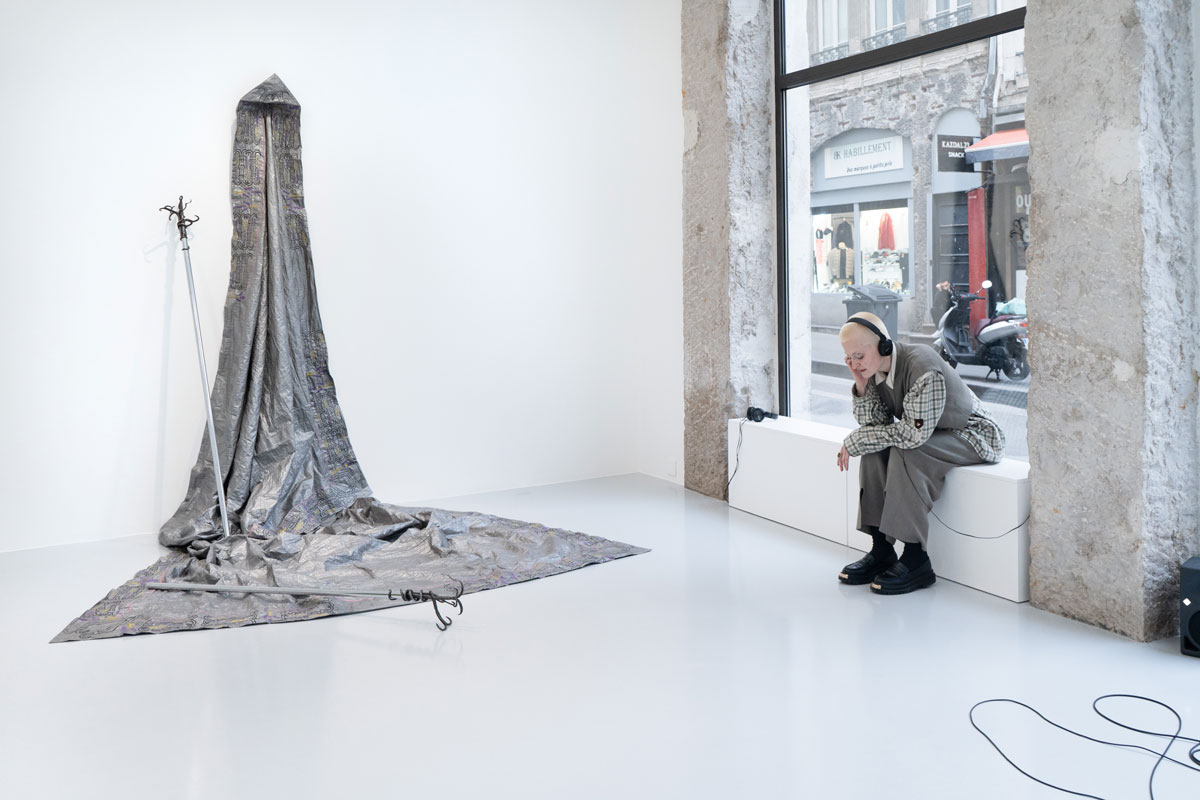
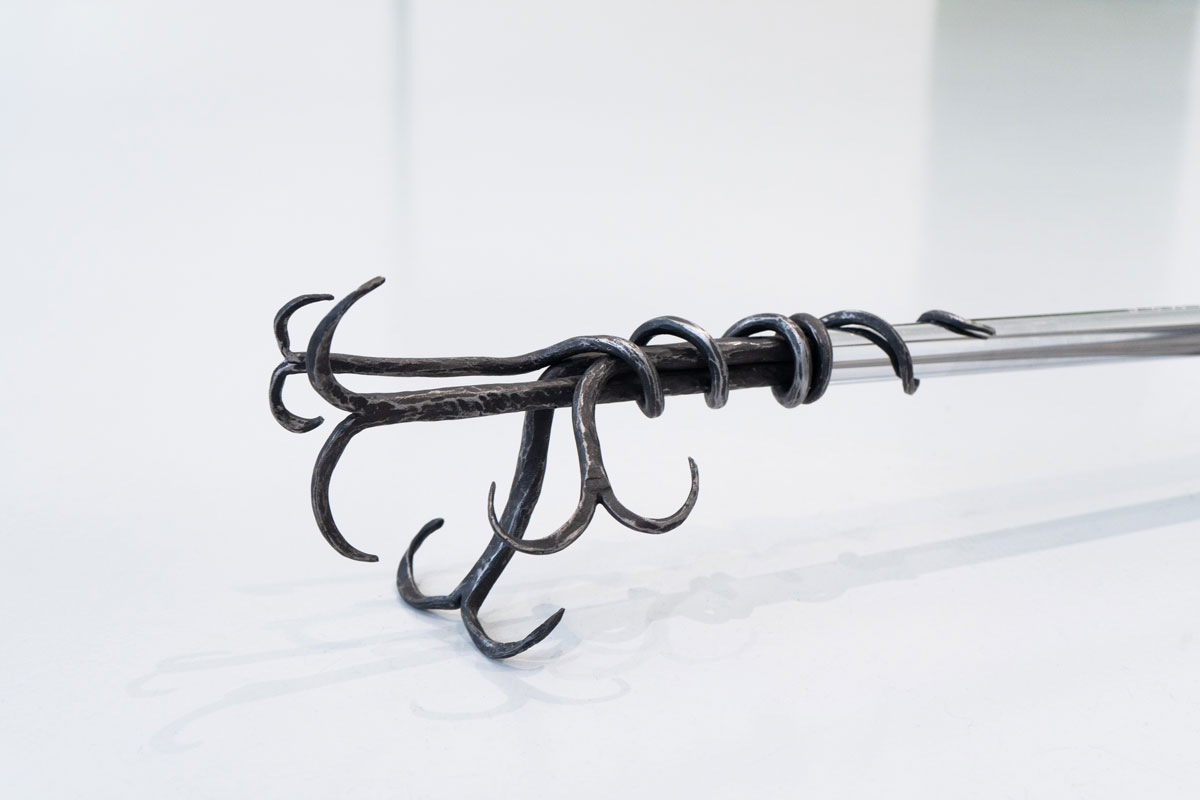
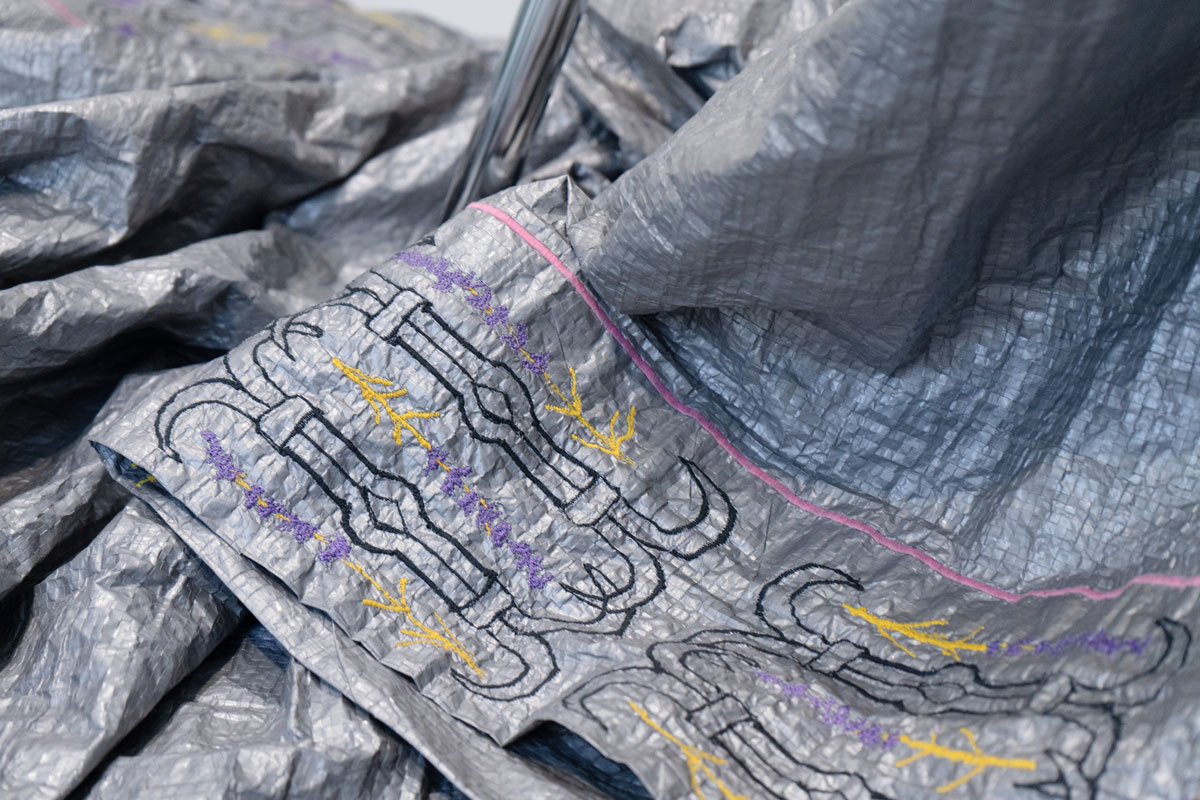
Gisèle Gonon explores the countryside in its agricultural relationships and affective dimensions. Her work is based on common materials, rooted in an intimate narrative of rurality. For her installation at KOMMET, Gisèle Gonon draws from her personal history, evoking a peasant life and queer lives in a rural environment. Inspired by the medieval heritage of Montbrun-les-Bains, she reinterprets the traditional banner, a symbol of rallying and collective identity, to display the struggles of the LGBTQIA+ community on a tarpaulin. The latter is decorated with lavender patterns, a purple plant emblematic of both Drôme Provençale and the queer community. Gisèle Gonon integrates an anchor plate, an element used to consolidate the structure of a building, which here becomes a metaphor for resistance and the bonds of a community to be preserved. This motif continues in the finials, whose design is also inspired by the aesthetics of the Echinops ritro, a hermaphrodite flower also known as the southern globethistle that can be found around the residency.
The soundtrack that accompanies this banner gives voice to those who project new narratives in the countryside, thus inscribing these testimonies in a landscape that can be perceived as inhospitable. Through this work, Gisèle Gonon affirms the possibility of a queer identity in a rural environment, opening a space where they can flourish.
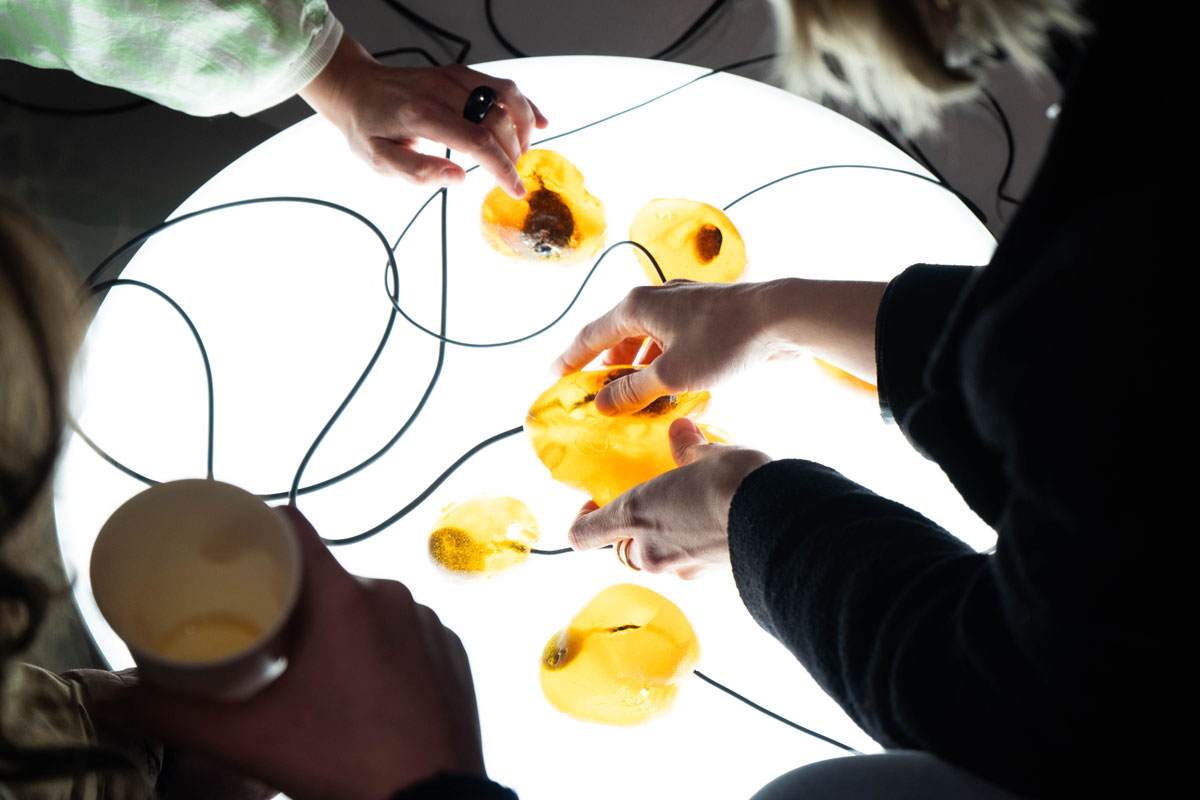
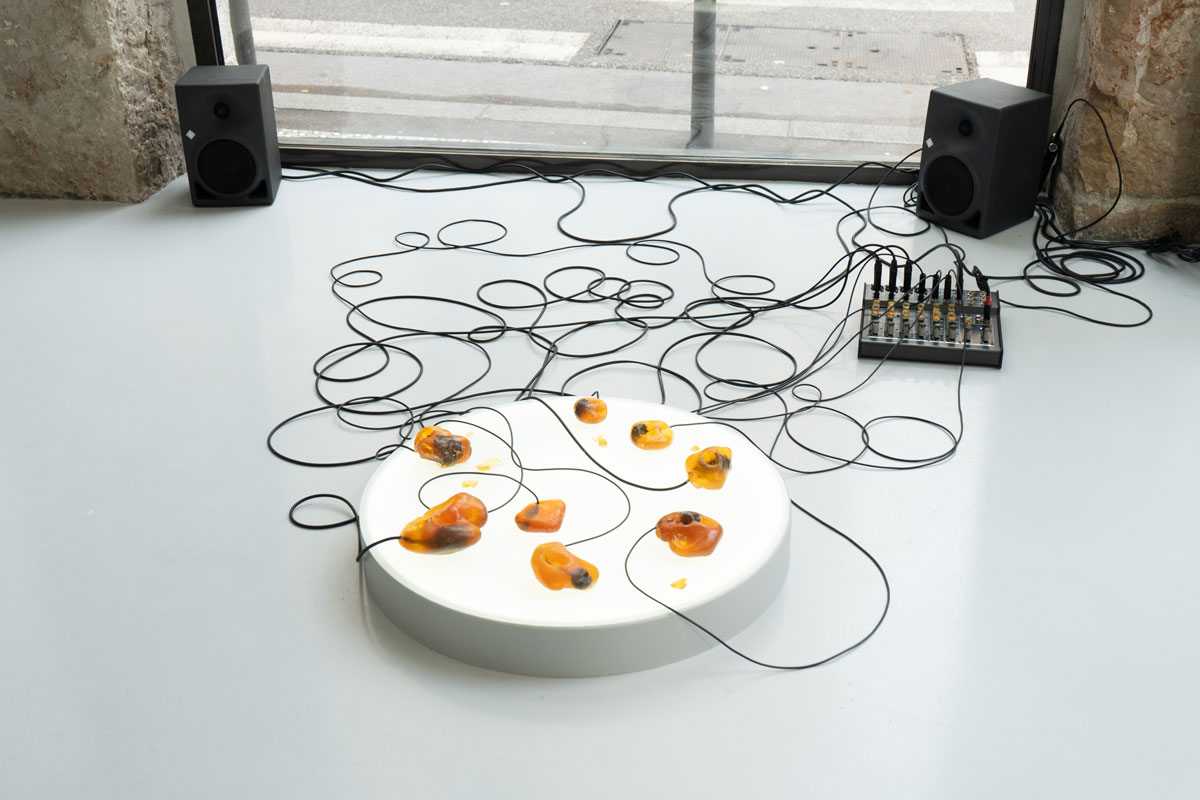
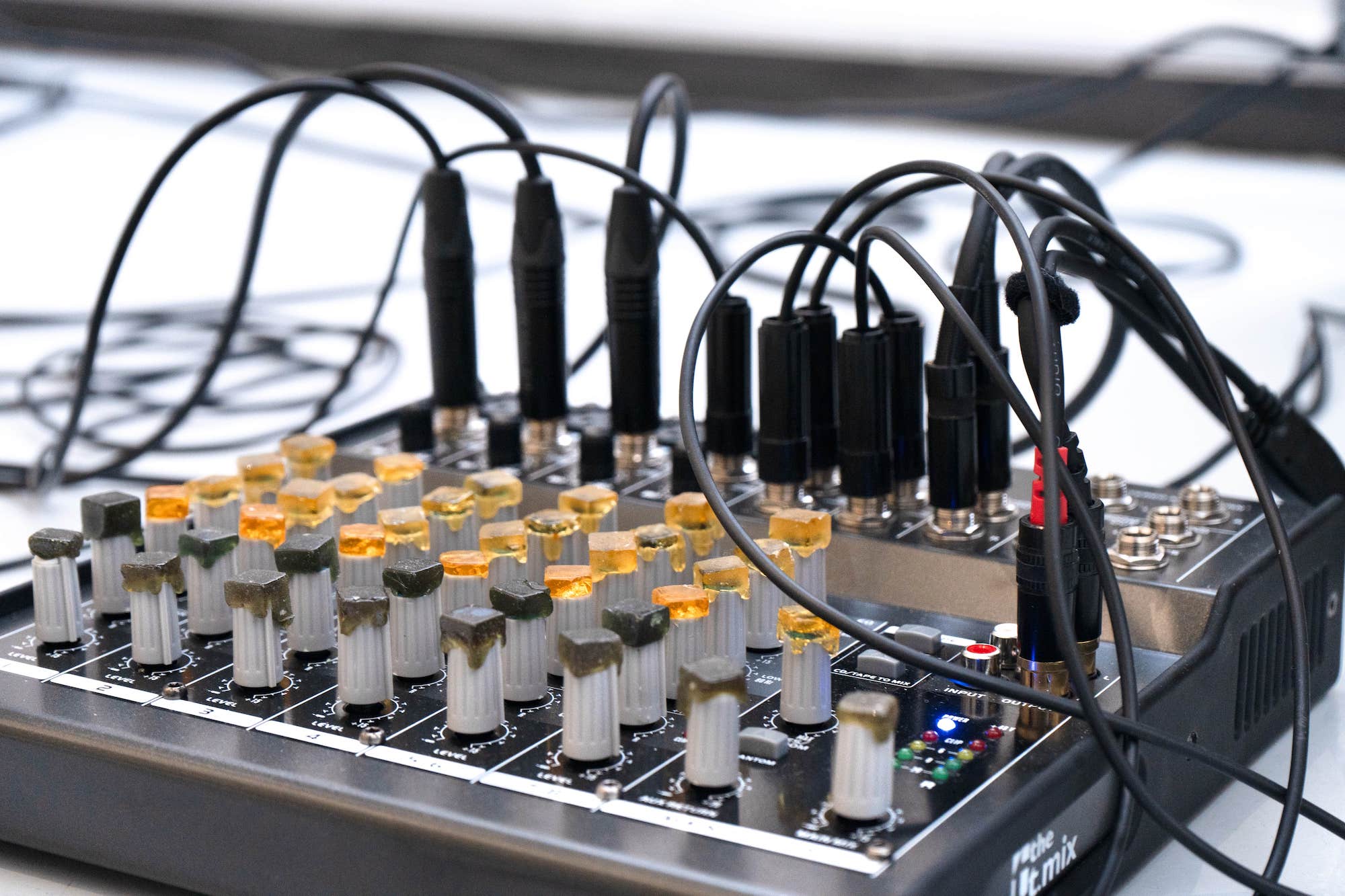
Julie Escoffier examines the properties of materials and their ancestral symbolism. Arranged on the floor, her installation questions the action of time on matter and the way in which it is perceived, manipulated and activated. The work takes the form of a luminous hearth where artifacts made of rosin, a translucent pine resin, are connected to a sound device. Sensitive to heat, this fragile material reveals a tactile and vibratory dimension. Its forms evoke “witches’ stones”, rocks naturally perforated by water erosion, to which protective virtues are attributed. Piezoelectric sensors capture the vibrations of the material in contact with visitors, generating an evolving, unpredictable sound score. The installation is thus based on interaction and activation, offering an intuitive and silent ritual. This non-verbal experience engages the body and underlines our relationship to a vulnerable world, calling for measured and delicate attention. Echoing the research of British anthropologist Tim Ingold, there is an interdependence between the organism and its environment. Julie Escoffier’s work illustrates this relational vision of the world, where beings and materials are never isolated but always caught in a network of mutual influences and transformations.
Pierre Boggio, Julie Escoffier and Gisèle Gonon question acts that enhance our connections, prolong resistance and accompany ongoing transformations. Each of these installations invites a shared experience, where the gesture – whether culinary, symbolic or tactile – becomes a tool for reappropriation and collective resonance. In a world marked by tensions and profound changes, these artists sketch out relational micro-territories where stories are constructed through interactions. Thus, le geste du commun is not limited to a single reflection on the community: it activates its mechanisms, reaffirming the importance of the links that connect us to others, to spaces and to our environment.
Livia Tarsia in Curia and Émilie d’Ornano
· Public program die geste des gemeinsamen (le geste du commun) ·
This text is a result of the work of a team of two, nourished by the ideas that arise from our respective projects (an· other here nomadic residencies and the art centre KOMMET in Lyon) and by those we have developed since we first worked together in 2021. Our frequent conversations, our ways of doing things, the projects we have developed together, and our discussions concerning them, have led progressively to the emergence of a shared vision. In constructing this text together, we have blended our individual thoughts and curatorial sensibilities in order to experiment with projects that are open and collective, leading to multiple forms of the gesture of the common.
die geste des gemeinsamen (le geste du commun) exists within a contrast. A gesture takes place in a singular manner, carrying an individual intention and expression. However, when linked with the word common, it becomes a single and unique movement that brings us closer together. The juxtaposition of these terms is transformed into – and resonates as – a collective action.
The two-language title underlines and amplifies the singular points of view for those who read it. Certain terms may take on a different shade of meaning. That displacement invites us to listen more closely and to recognise that the same word may reverberate in different ways. When changing from one language to another, we realise that each word carries a particular way of seeing the world. So we feel our way along, searching for equivalents that are never completely adequate. This slight fluctuation often opens up the discussion instead of closing it.
It is a way of recognising that due to their differences, histories and cultures represent inestimable wealth. On the scale of a country, a city, a village or a neighbourhood, each space is different and distinctive. To take this diversity into consideration is to conceive projects that have to do with relationships, that are situated, and that are sensitive and attentive to their contexts.
The project involves a collective gesture, through which run many forms of presence, and which invites us to reenchant our imaginary conceptions of urban and rural milieux. Creating counter-fictions allows these narratives to become a field of ideas. An invitation to clear away our pre-existing conceptions of these spaces, in order to make them desirable and to counteract the notion that they are in opposition to each other.
To be together also means to unlearn certain habits that are sometimes deeply entrenched: competition, isolation, the fear of not being “in one’s place”. Artistic practices open up spaces where these reflexes may be put aside and where one can try something different. Welcoming ways of doing things that are unfamiliar to us, is perhaps one of the most complex learning processes that can help us to recognise that other approaches, other rhythms, other sensibilities, may coexist with our own.
Nothing is transmitted unilaterally: each person arrives with their own tools, their own way of understanding the gestures, the situations, and it is only in this way that something may be created. Finally, one learns by observing what others propose and by tailoring our gestures to those of others. This form of shared learning opens up a field where differences are no longer obstacles but become veritable resources. It allows us to build a collective space that is shaped by encounters and the way that each person can leave space for what the other has to offer.
die geste des gemeinsamen (le geste du commun) aims at transmitting and sharing different forms of knowledge that have to do with the notion of community, reaffirming the importance of the ties that bind us to others, to spaces, and to our environment. Events, both past and future, are favorable for experimenting with other forms of being together: without a clear and rigid hierarchy, and with the desire to construct shared moments in which voices overlap, listen to each other, answer each other. die geste des gemeinsamen (le geste du commun), is truly an invitation to visit a space where one doesn’t have to be legitimate in order to exist, contribute, and construct the world along with others.
Livia Tarsia in Curia and Émilie d’Ornano



Program
From 1 to 6 pm
Public Program
Curated by Livia Tarsia in Curia and Émilie d’Ornano
Location: Institut für Alles Mögliche, Berlin-Mitte (GE)
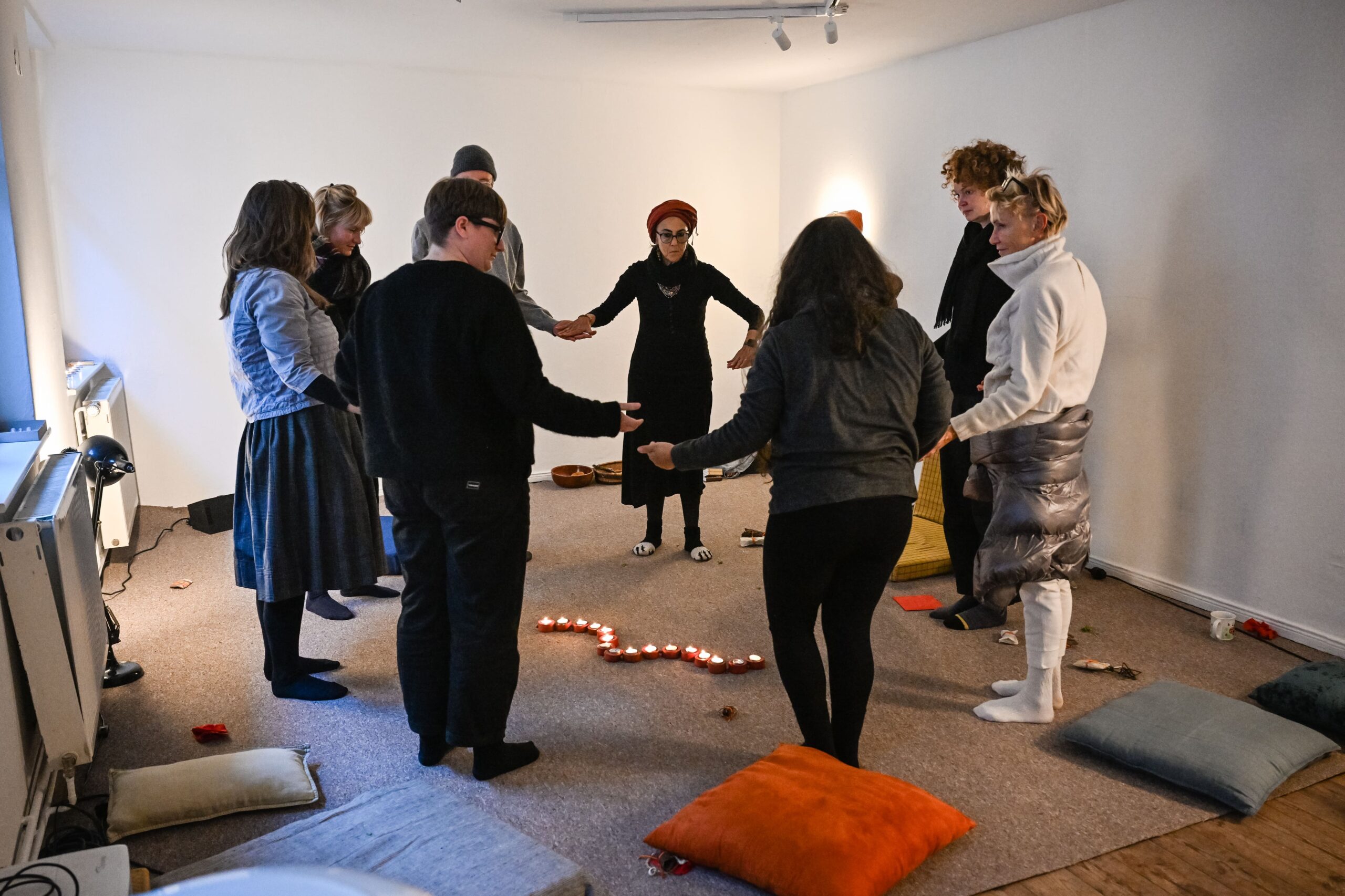
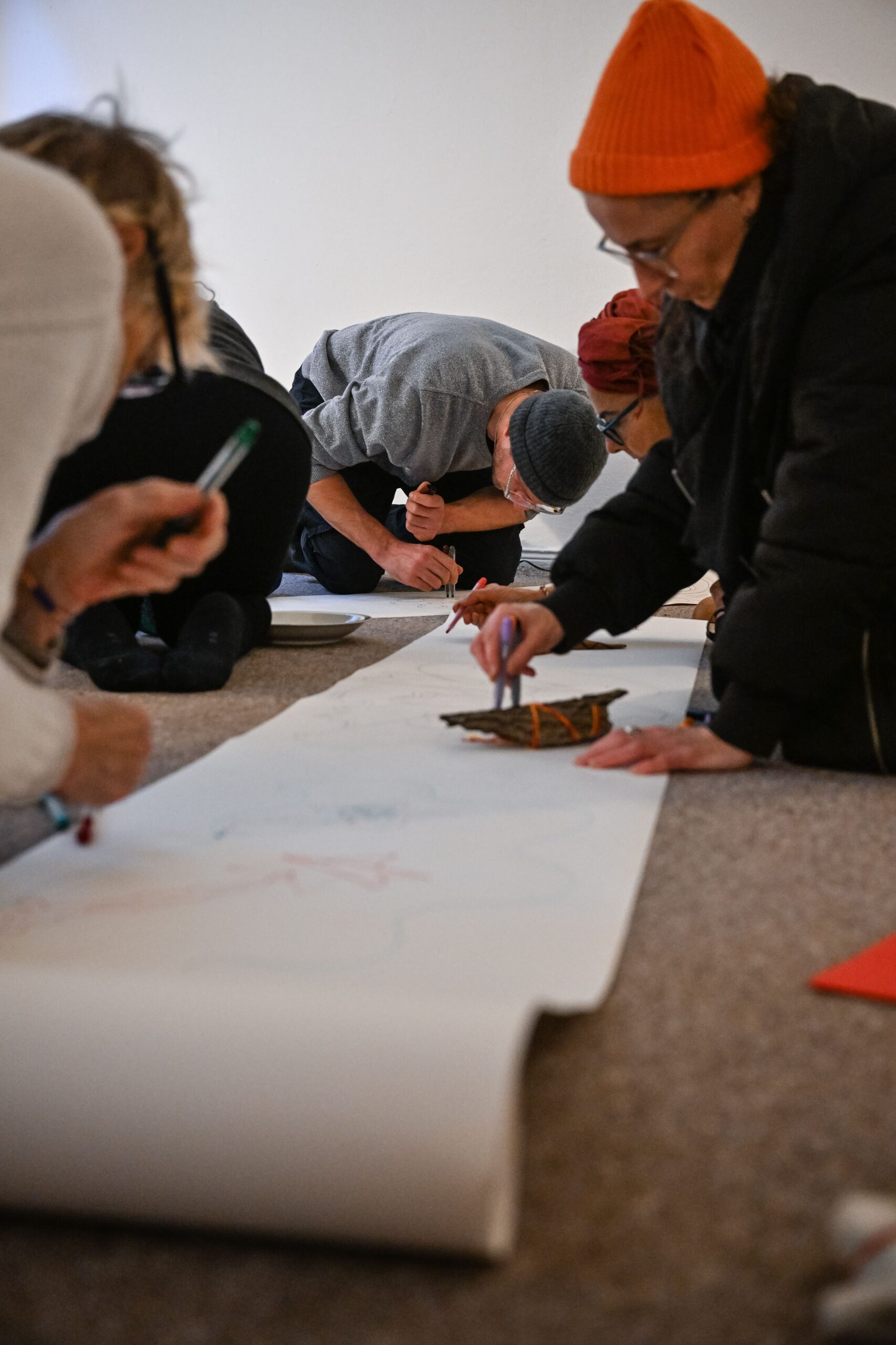
The final Berlin event took place during a convivial day at the Institut für Alles Mögliche (Berlin). The program included a presentation of the workshops led by artist and curator Cleo Wächter at the Bona Peiser socio-cultural space. Researchers Nadine Wanono and Côme Ledésert offered a participatory lecture based on minor gestures, exploring disempowering constraints and generating a shared, improvised intelligence. Artist Gisèle Gonon then invited us to a collective listening session of her piece Dissidences des Champs, followed by a discussion about her 2024 research on queer lives in rural areas.
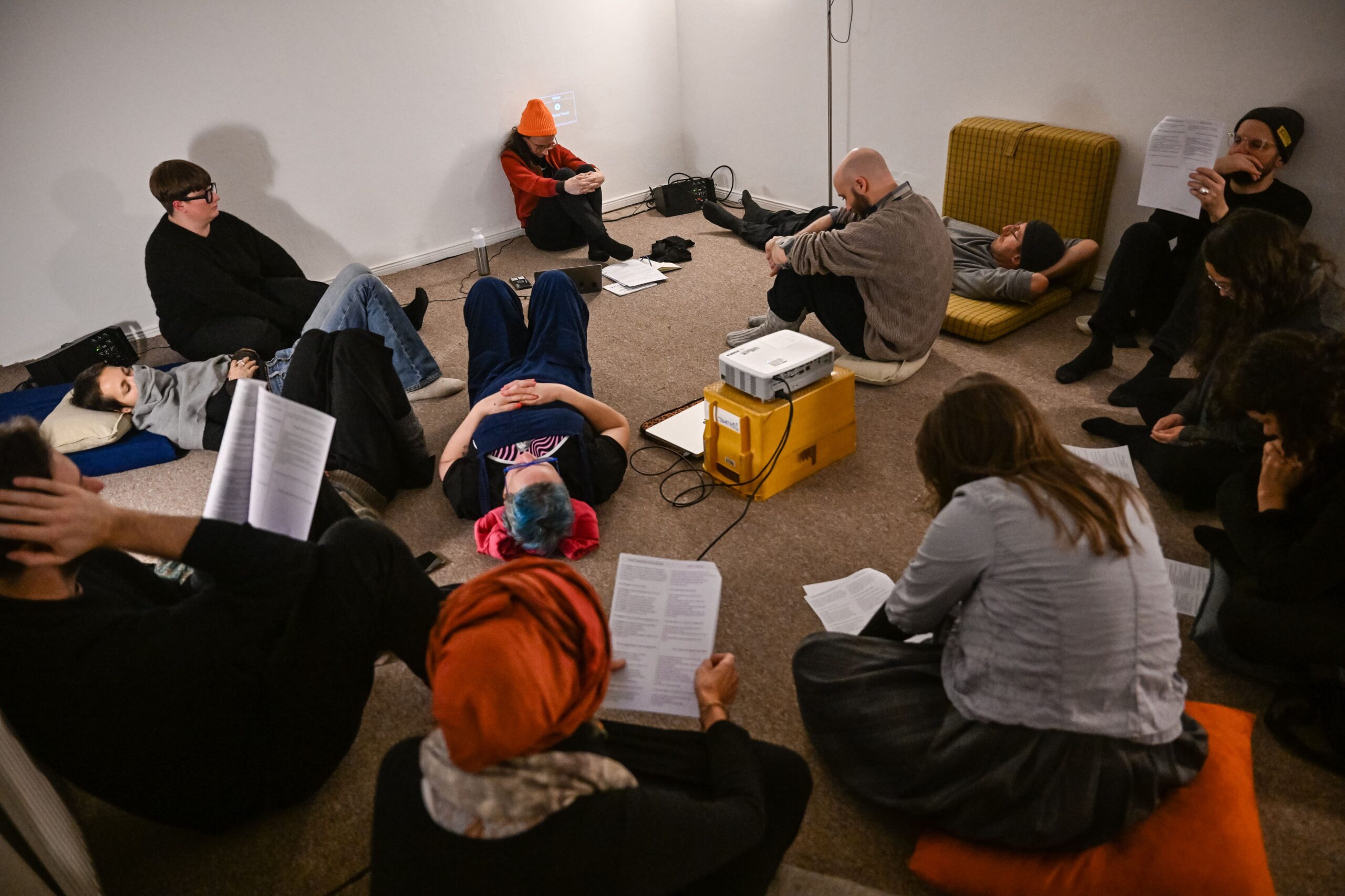
To conclude, a video produced by Lam Son Nguyen at KOMMET was screened, allowing us to review the results of the research carried out by the artists in residency in Montbrun-les-Bains (Drôme-Provençal) and Berlin, as well as the work of the two curators of this year-long project.
At the Institut für Alles Mögliche, artists, speakers, and participants gathered to discuss the project’s themes. Through participatory and immersive practices, die geste des gemeinsamen (the gesture of the common) proposed to rethink the dynamics of collaboration and possible forms of social transformation. By combining urban and rural contexts, the project questioned the ways in which art can contribute to shaping spaces for dialogue, resistance, and collective reinvention.
From 4 to 6:30 pm
Workshops
Facilitated by Cleo Wächter
Location: Bona Peiser Soziokulturelle Projekträume, Berlin (GE)
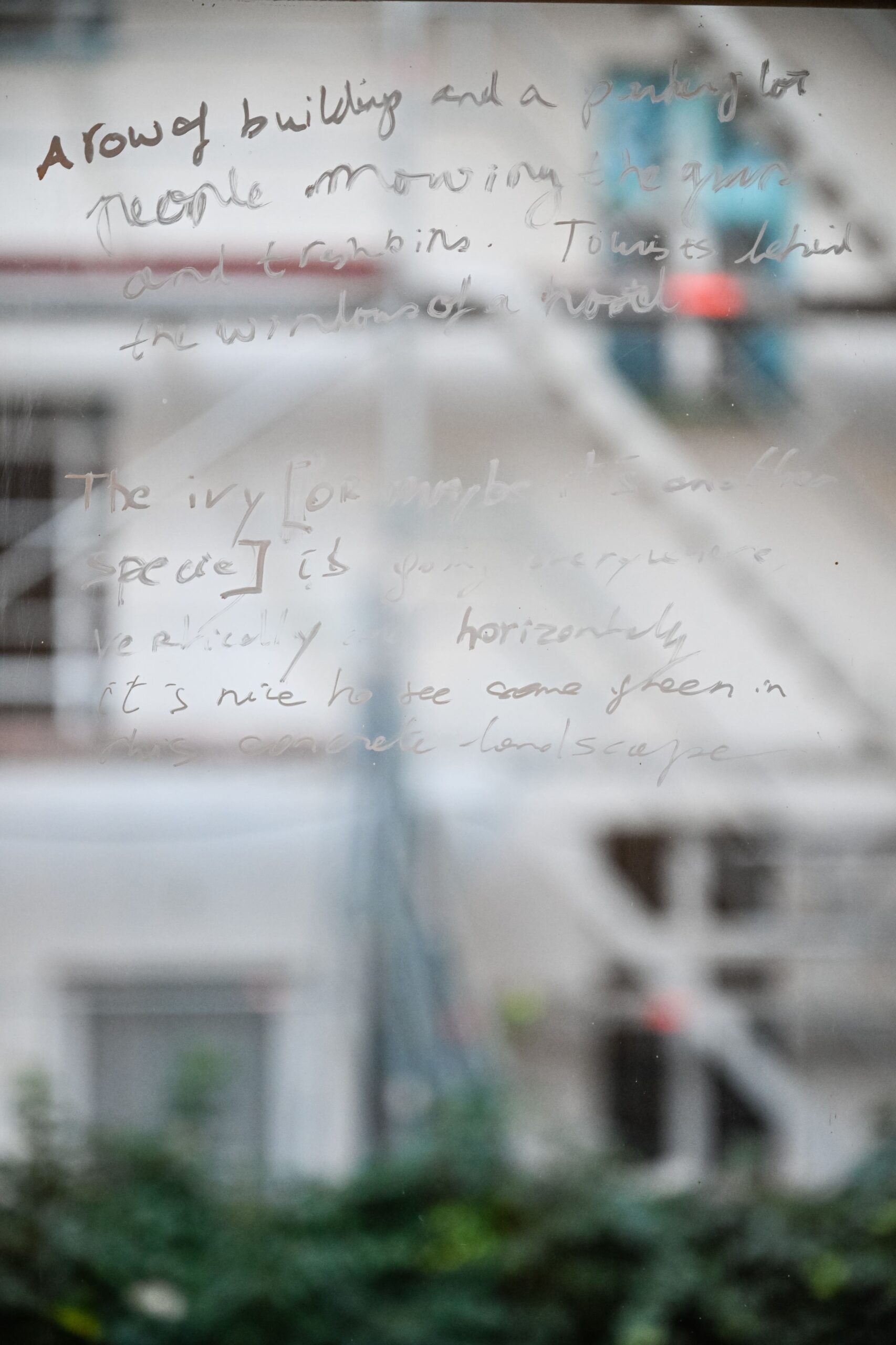
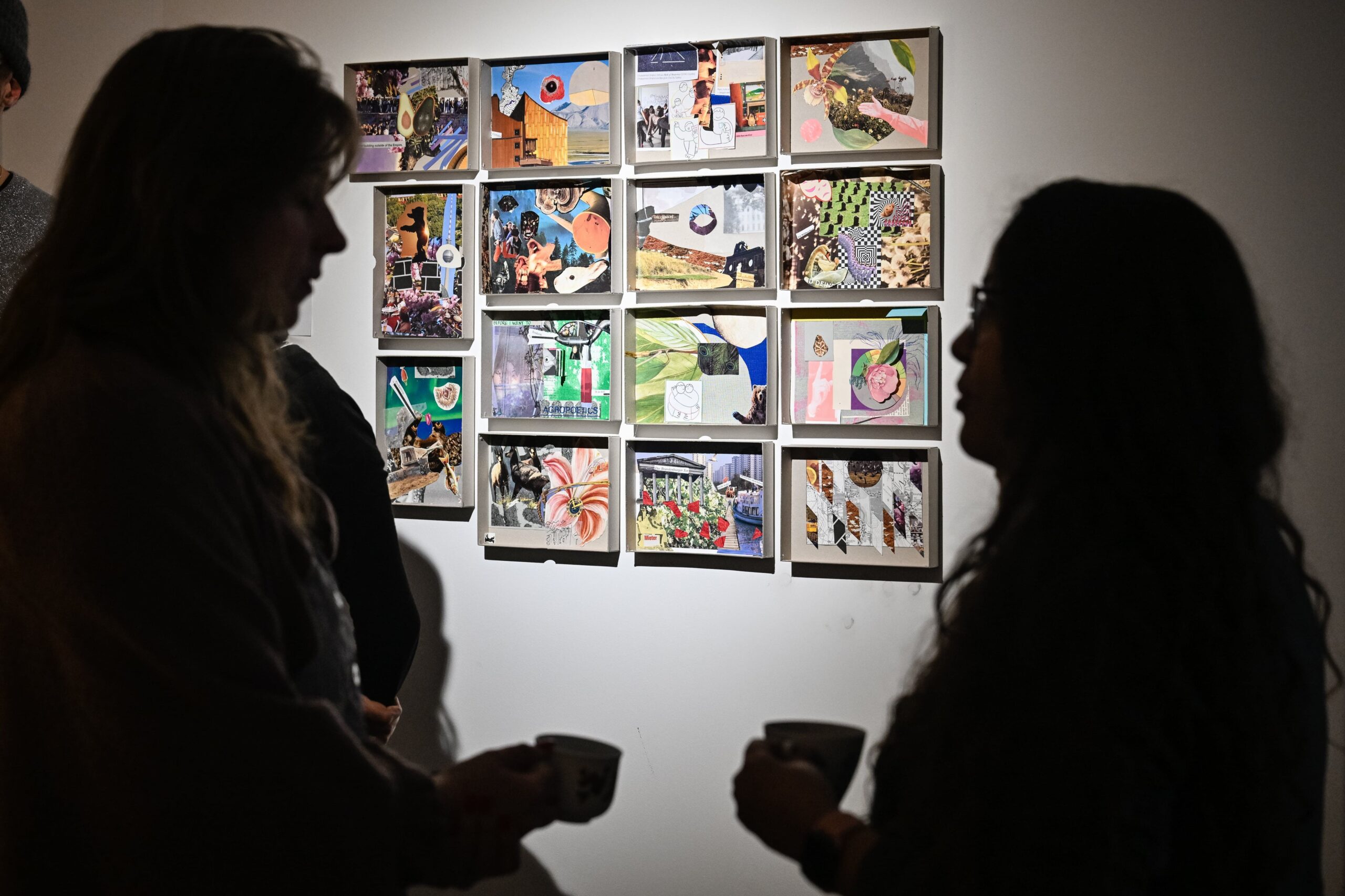
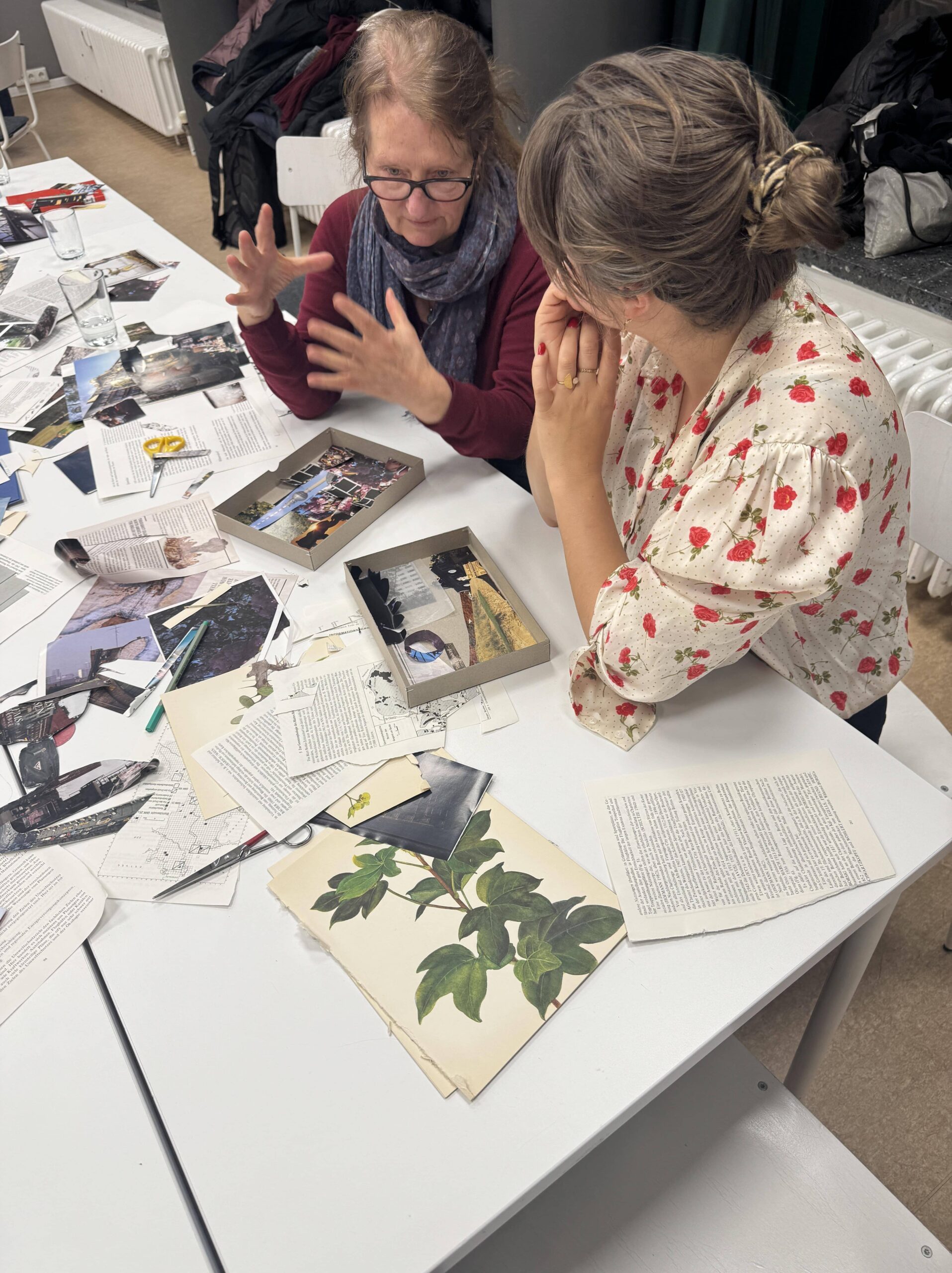
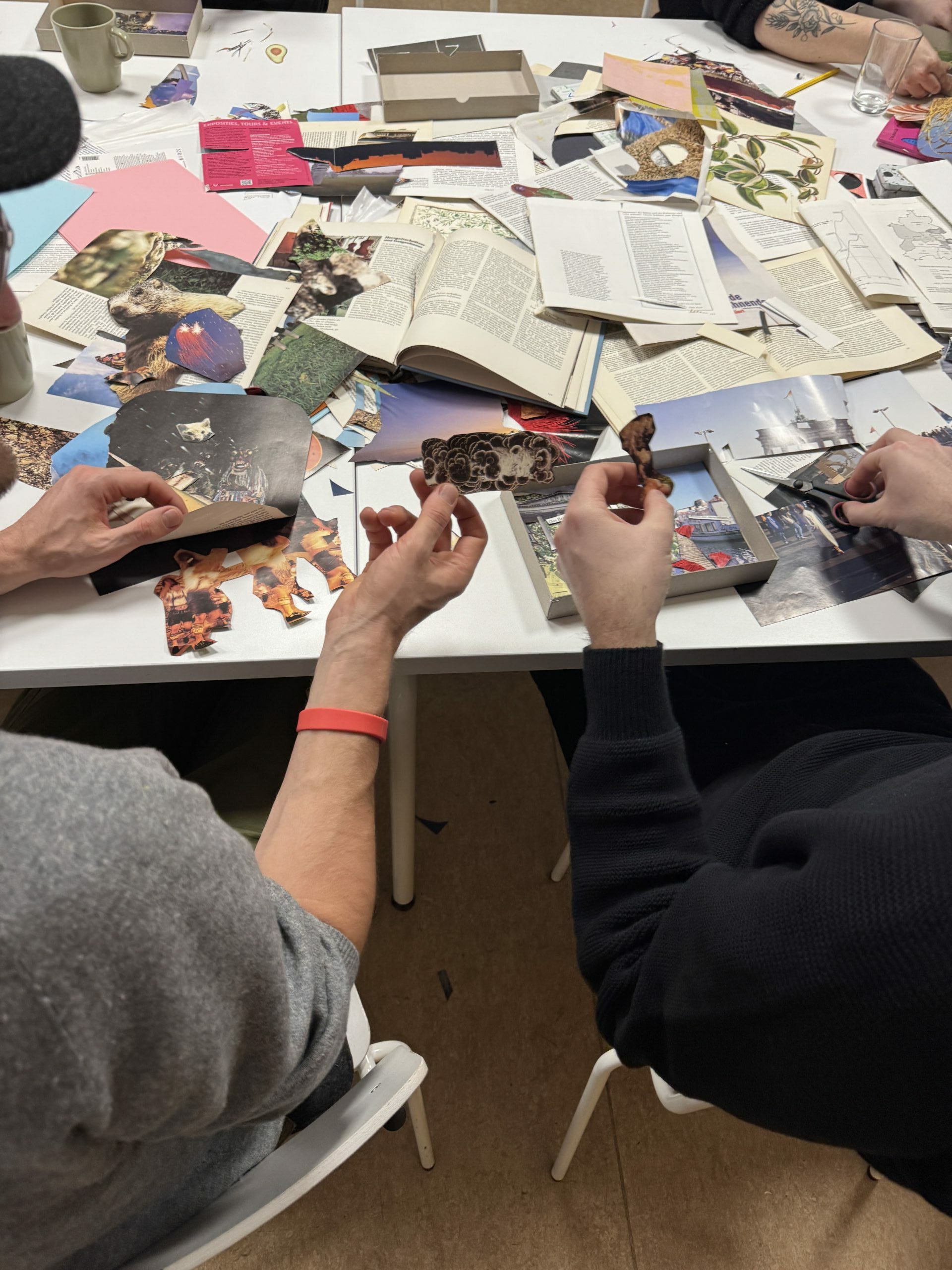
A landscape is made by looking at it. Our gaze frames the world, like our stories shape the city. Each of us moves through the world with a unique frame of reference, a personal lens shaped by experience, culture, memory, and attention. The same street will look different to anyone who walks it.
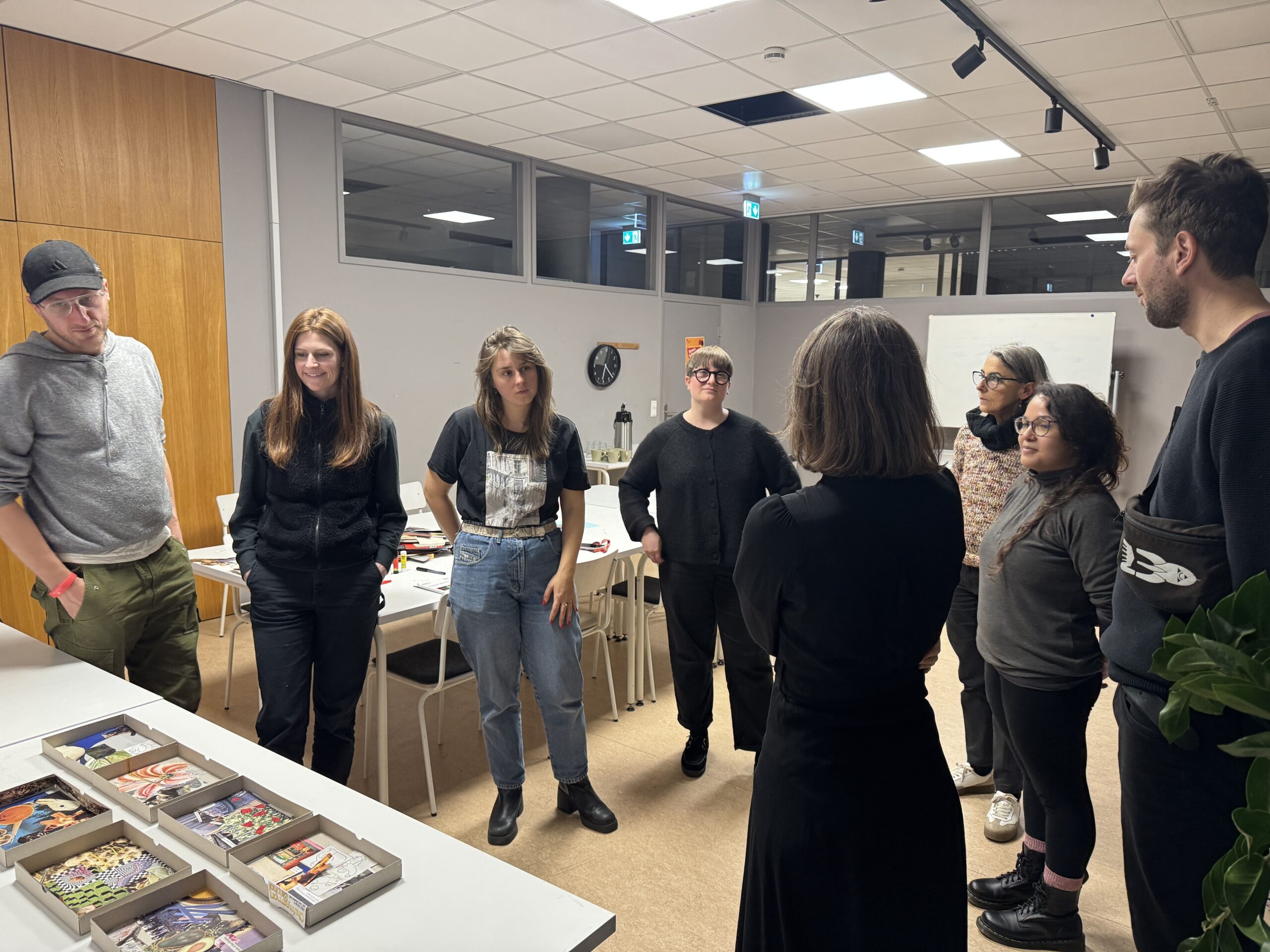
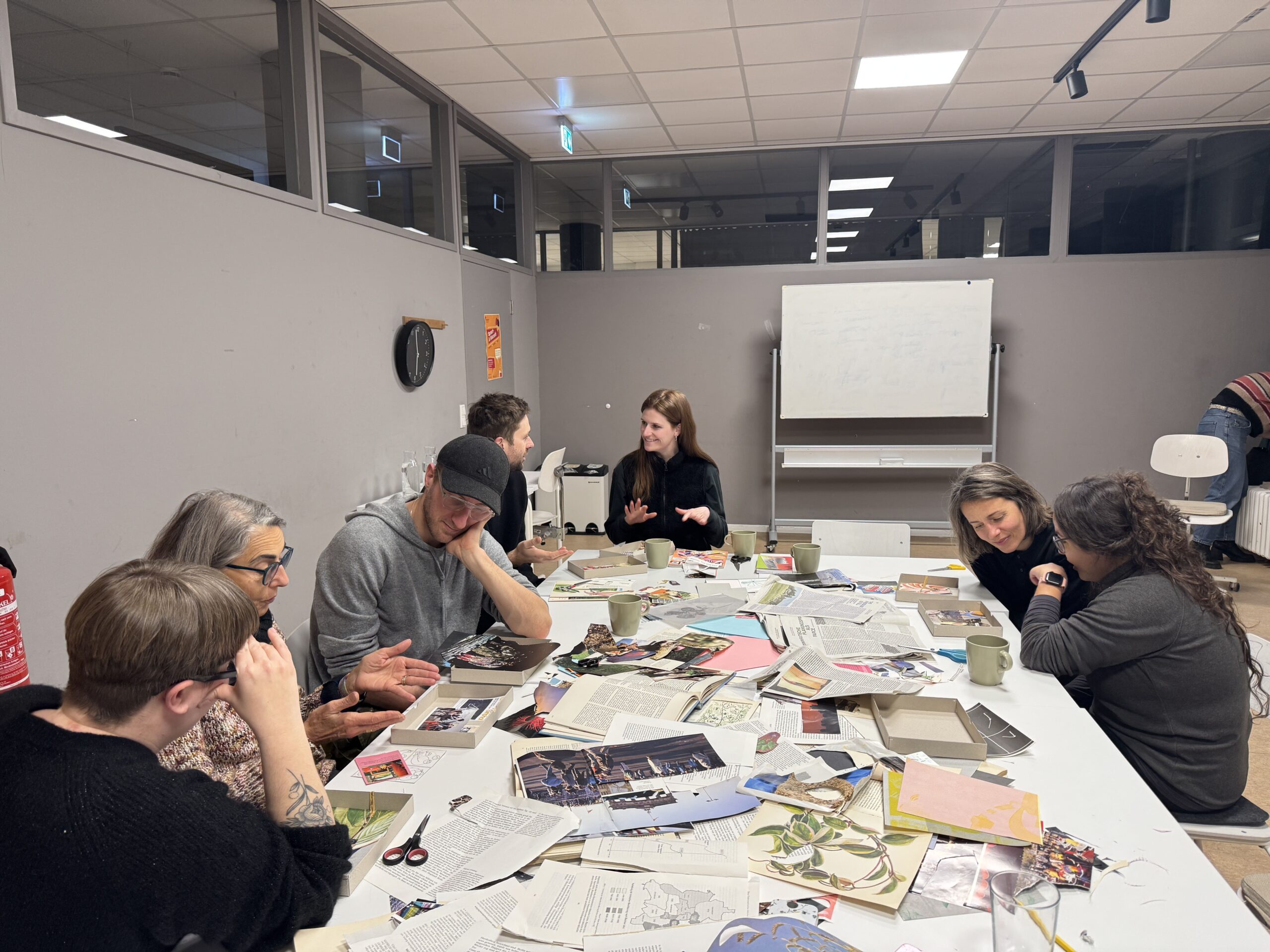
In this workshop, taking place one street away from Berlin’s “Geographical middle”, we will look for a common view on the city. Through a series of noticing and description exercises, we’ll explore how our individual perspectives influence how we see, describe, and relate to our surroundings.
Using photography, writing, and collage, we will then create a personal “mini-landscape”, an expression of how one experiences the city’s essence, its core. The aim of the workshop is to compare our perspectives and practice layering our personal narratives into a collective panorama. A shared landscape composed of many views.
Cleo Wächter
From 5 to 8 pm
Double-cross residency closing event
Location: Institut für Alles Mögliche, Berlin-Mitte (GE)
Having grown up on a peasant farm, Gisèle Gonon blends autobiographical elements from the working class with social science and empirical experience without romanticizing the figure of the peasant, rural life, or the relationship with so-called Nature. As a queer person, she questions the notion of the “natural” and proudly embraces queerness, particularly in what it implies in terms of deconstruction, inclusion, and representativeness.
In her research, Gisèle Gonon uses materials borrowed from rural life, such as wrought iron and protective tarpaulin, in reference to ancient know-how and working components. Her sculpture and performance transform the symbol of the traditional flag. Stripped of its authoritative role, the standard takes on a fragmented form, marked by palpable tension. The work becomes a surface for expression, a space where each person is invited to project, fantasize, or dream their desires.
Inspired by town criers, Gisèle Gonon plays with the performative statement. During meetings with the queer community at Cafés-Gâteaux*, poetic and protest messages were collected. These voices are addressed to all for her end-of-residency event, offering a committed and collective dimension.
This first stage of the work prefigures a second one at the Institut für Alles Mögliche in Berlin on November 30, as well as a final form, which will be exhibited from February to April 2025 at the KOMMET art center in Lyon.
Following the performance, Gisèle Gonon’s studio will be open to the public to discover her work in progress. A small buffet will also be served.
We warmly invite you to meet the artist, the Art Workers Collective Polynome, who curated this event and share your impressions in the family atmosphere of an· other here.
During his residency in Berlin, Pierre Boggio collected recipes, anecdotes, and myths about the culinary roots of his interlocutors, whether German natives or those from elsewhere. His ceramics, created specifically for these moments of sharing, became ritual objects that allowed conviviality and encounters. With utensils inherited from his family, Pierre Boggio created a dialogue between his past and local history. As main material, the stoneware clay personified objects by folklore of the Provençal Tarasque, the Ondine from Germanic mythology, and L’Orcolat from Friulian popular tradition. Here, the public was invited to sample a recipe prepared by the artist, served on plates inspired by his vision of Berlin autumn. During this event the people shared their relationship to cooking through the printed objects, and even swap a spoon or a bowl for whatever you’d like.
During her residency in Berlin, Julie Escoffier conducts phonic research on rosin (pine resin) and what she calls “offering sculptures”. She is inspired by witches’ stones – pierced by the action of water, associated with protective beliefs – as well as recently discovered symbolic objects. This research into ritual practices has led her to rethink the idea of offering, no longer destined for a particular divinity but centered on the interactions between the human and the non-human through matter. She created new forms in rosin that integrate visual and sound languages, activated by the public at this end-of-residency event. She is also presenting a limited-edition piece from an installation that gathers knots she ties every day, along with a wish.
After a two-month residency at Montbrun-les-Bains in the French region Drôme, Gisèle Gonon is bringing the fruit of her research back to Berlin, where she lives. She has turned to materials borrowed from rural life, such as wrought iron and protective tarpaulin, in reference to ancient skills and work components, to create a sculpture and performance that transform and deconstruct the traditional banner into a queer rallying symbol. The performance she carried out on November 17 with the Art Worker Collective Polynome, inspired by the town criers, gave a voice to queer people in rural areas. Here at Institut für Alles Mögliche, she shows written traces of this performance, accompanied by a small edition she crafted.
From 3 to 6 pm
Café-Gâteau Queer with Gisèle Gonon
Location: Residency House, Montbrun-les-Bains (FR)
These encounters, facilitated by Gisèle Gonon, artist in residence within the Franco-German program an· other here, were an opportunity for the queer/LGBTQIA+ community to meet and exchange ideas in a supportive environment.
Gisèle was researching on queer communities in rural areas and the forms of protest that emerge there, in the broader political context of the struggle for minority rights and visibility.
These moments were thought of as spaces intended for sharing and reflection on their pride, needs, and their urgent issues.
On the agenda:
Open discussions about what it means and what it takes to be queer in rural areas
Creating signs and slogans
We provided resources such as a small personal library, press articles, and graphic documents, including research on inclusive writing.
From 3 to 6 pm
End-of-residency event of Gisèle Gonon
Curated by the Art Workers Collective Polynome
Location: Residency House, Montbrun-les-Bains (FR)
Inspired by town criers, Gisèle Gonon plays with the performative statement. During meetings with the queer community at Cafés-Gâteaux*, poetic and protest messages were collected. These voices are addressed to all for her end-of-residency event, offering a committed and collective dimension.
This first stage of the work prefigures a second one at the Institut für Alles Mögliche in Berlin on November 30, as well as a final form, which will be exhibited from February to April 2025 at the KOMMET art center in Lyon.
Following the performance, Gisèle Gonon’s studio will be open to the public to discover her work in progress. A small buffet will also be served.
We warmly invite you to meet the artist and share your impressions in the family atmosphere of an· other here.
Filmed and Edited by Mathias Chachay Produced by KOMMET – Lieu d’art contemporain Lyon and an· other here residency in collaboration with the Polynome collective
In partnership with
In collaboration with
As part of Résonance program of the 17th Lyon Biennale 2024
Sponsored by
This exhibition is supported by

Archive
ReadBack to all Editions